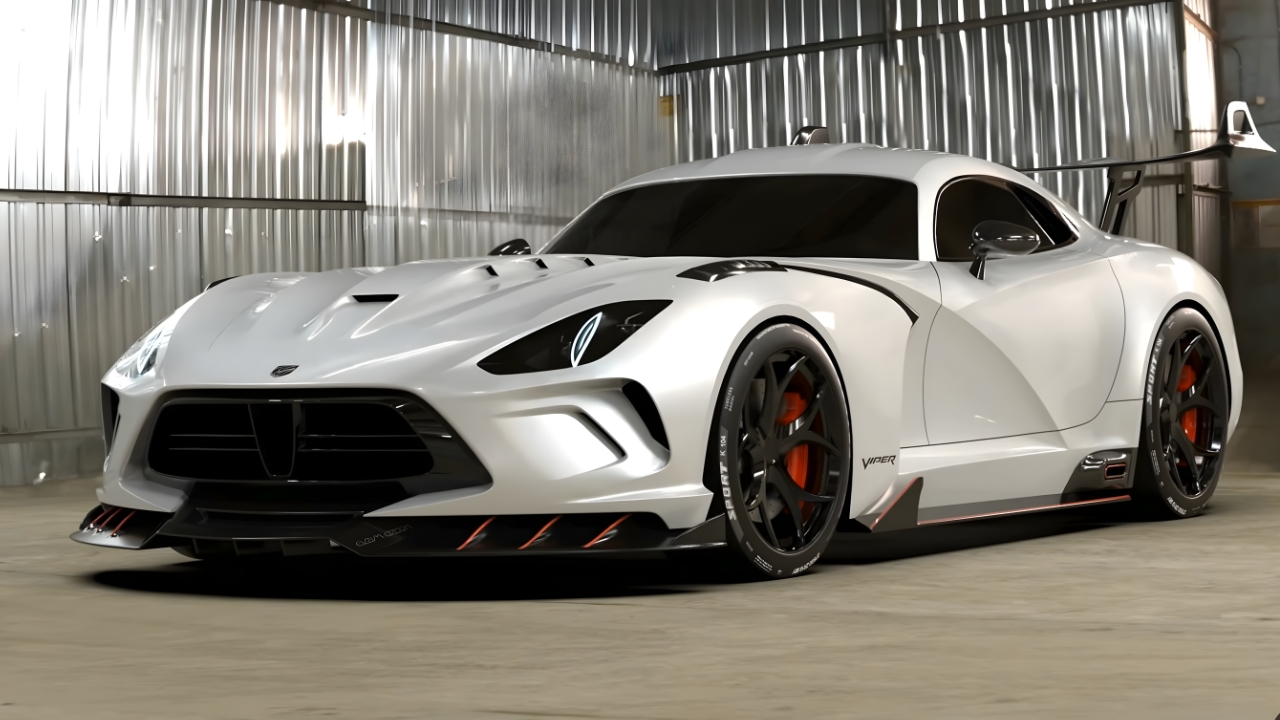
The 2026 Dodge Viper is shaping up to be one of the most anticipated performance car revivals in recent years. After disappearing from production in 2017, the Viper left behind a legacy built on raw power, aggressive styling, and a driving experience that demanded respect. Now, rumors of its return suggest that Dodge is preparing something even more extreme—an 850-horsepower machine packed with advanced technology and modern safety systems.
Unlike many performance cars that have shifted entirely toward electrification, the Viper’s rumored comeback appears to stay true to its gasoline-fueled roots while embracing new engineering advancements. The result could be a supercar that honors its heritage while competing with today’s high-tech rivals.
What Is the 2026 Dodge Viper?
The 2026 Dodge Viper is expected to be a front-engine, rear-wheel-drive American supercar designed for purists. While official details remain under wraps, leaks point toward an output of around 850 horsepower, placing it firmly in hypercar territory. Whether powered by a reworked V10 or a high-output twin-turbo V8, the goal remains clear: deliver brutal performance without sacrificing driver engagement.
Dodge appears committed to preserving the Viper’s raw character. This means minimal electronic interference, sharp throttle response, and a chassis tuned for maximum feedback. It won’t be a luxury cruiser disguised as a sports car. It will be a focused performance machine built for enthusiasts who value control and connection over comfort.
Exterior Design That Commands Respect
The new Viper is rumored to retain its signature long hood and muscular proportions. Slim LED headlights with an aggressive glare give the front fascia a modern edge, while massive air intakes ensure the engine receives ample cooling under extreme conditions. Carbon fiber elements are expected throughout the body, reducing weight while enhancing aerodynamics.

Wide fenders stretch over performance tires, giving the car a planted and intimidating stance. At the rear, sleek taillights span the width, complemented by a large diffuser and quad exhaust outlets that signal serious power. Active aerodynamic components may adjust automatically at high speeds, improving downforce during aggressive driving and reducing drag on straightaways.
Every angle of the 2026 Viper appears engineered to look fast even when standing still.
An 850 Horsepower Powertrain Built for Thrill
At the heart of this beast lies the headline figure: 850 horsepower. Speculation suggests Dodge may revive and modernize its iconic V10 engine, possibly with lightweight internals and improved airflow for higher output. Another possibility is a twin-turbocharged V8 delivering massive torque across the rev range.
Paired with a high-performance dual-clutch transmission or potentially a traditional manual gearbox, the Viper is expected to sprint from 0 to 60 mph in under three seconds. Top speeds could exceed 200 mph, placing it in direct competition with elite global supercars.
Rear-wheel drive remains central to its identity, ensuring that the driver remains fully involved in every acceleration burst and corner exit.

Interior Focused on Performance and Precision
Inside, the 2026 Viper is expected to blend race-inspired minimalism with modern digital features. Alcantara, carbon fiber trim, and lightweight bucket seats will dominate the cabin. A flat-bottom steering wheel and performance-oriented controls reinforce its track-ready focus.
A curved digital instrument cluster will likely display real-time performance data, including lap times, G-forces, tire temperatures, and engine metrics. A central infotainment screen may provide connectivity and navigation without distracting from the driving experience.
Unlike older generations known for sparse interiors, the new Viper may include premium touches while maintaining its no-nonsense character.
Advanced Safety and Driver Assistance
Even a hardcore supercar must meet modern safety standards. The 2026 Viper is expected to feature advanced systems such as adaptive cruise control, forward collision warning, lane departure alerts, and high-performance stability control settings. However, these systems will likely be adjustable, allowing experienced drivers to dial back electronic assistance when on the track.
Carbon-ceramic brakes should provide exceptional stopping power, while adaptive suspension systems adjust to road conditions in real time. Structural improvements using lightweight alloys and reinforced materials will enhance both safety and rigidity.

The balance between performance freedom and protective technology could define this new generation.
Built to Dominate Road and Track
Beyond raw speed, the Viper’s reputation has always rested on its track ability. An aluminum or composite spaceframe chassis is expected to improve stiffness and reduce weight. Enhanced cooling systems will support extended high-performance driving sessions without compromise.
Rumors of an ACR-style variant suggest a more extreme version focused entirely on lap records, complete with larger wings, stripped interior components, and race-tuned suspension. Whether on public roads or closed circuits, the Viper aims to deliver an intense, engaging experience.
Final Verdict
The 2026 Dodge Viper appears ready to reassert itself as a fearless American supercar. With an estimated 850 horsepower, advanced aerodynamics, improved safety features, and a driver-first philosophy, it promises to honor its legendary past while stepping confidently into the future. If these reports hold true, the Viper’s return won’t just be a comeback—it will be a statement that raw performance still has a place in a rapidly changing automotive world.
